


UAE Corporate Tax Explained for Small Businesses (2026 Guide for Entrepreneurs)
Dubai and the wider UAE have long been known for their business-friendly environment and tax advantages. However, with the introduction of UAE Corporate Tax, many small business owners are now asking an important question:
Will my business need to pay tax in the UAE?
For entrepreneurs and global founders planning to expand into Dubai, understanding the new tax framework is essential before starting a company.
This guide explains the UAE corporate tax system in simple terms — including who needs to register, how much tax applies, and how small businesses can stay compliant while still benefiting from the UAE’s attractive tax environment.
Table of Contents
What Is UAE Corporate Tax?
UAE Corporate Tax is a federal tax applied to the net profits of businesses operating in the UAE.
It was introduced by the UAE Ministry of Finance and implemented by the Federal Tax Authority to align the country with global tax transparency standards.
The tax officially came into effect on June 1, 2023.
However, the UAE still remains one of the most competitive tax environments globally.

Corporate Tax Rates
The system is intentionally simple:
| Taxable Profit | Corporate Tax Rate |
|---|---|
| Up to AED 375,000 | 0% |
| Above AED 375,000 | 9% |
| Large multinational companies* | 15% (OECD rules) |
For most startups and small businesses, the first AED 375,000 of profit remains tax-free.
Why the UAE Introduced Corporate Tax
The UAE introduced corporate tax for several strategic reasons:
• Align with global tax standards
• Prevent profit shifting by large multinationals
• Strengthen economic transparency
• Maintain long-term investor confidence
Despite the new tax, the UAE remains far more competitive than many countries.
For example, corporate tax in India can exceed 25–30%, while the UAE maintains a maximum standard rate of only 9%.
Do Small Businesses Need to Pay Corporate Tax?
Many small businesses will not immediately pay corporate tax due to a special relief scheme.
The UAE introduced Small Business Relief to support startups and small enterprises.
Who Qualifies?
A business may qualify if:
• Annual revenue is below AED 3 million
• The company is a UAE resident entity
• It is not part of a multinational group
If eligible, businesses can claim relief corporate tax.
However, they must still register and maintain financial records.

Corporate Tax for Free Zone Companies
One of the most attractive aspects of the UAE tax system is that many Free Zone businesses may continue to benefit from 0% corporate tax.
However, this only applies if the company qualifies as a Qualifying Free Zone Person.
To qualify, a Free Zone company must:
• Maintain adequate substance in the UAE
• Earn qualifying income
• Comply with transfer pricing rules
• Maintain audited financial statements
If these conditions are met, the company may continue to enjoy 0% corporate tax on qualifying income.
Mainland vs Free Zone: Tax Impact
For entrepreneurs choosing between Mainland and Free Zone company setup, corporate tax implications matter.
Mainland Companies
Mainland businesses pay:
• 0% tax on profits up to AED 375,000
• 9% tax on profits above this threshold
Mainland companies have the advantage of unrestricted UAE market access.
Free Zone Companies
Free Zone businesses may benefit from:
• 0% corporate tax on qualifying income
• 9% tax on non-qualifying income
However, certain conditions must be met to maintain the tax advantage.
Corporate Tax Registration Requirements
All UAE businesses must register for corporate tax through the Federal Tax Authority.
This includes:
• Mainland companies
• Free Zone companies
• Branches of foreign companies
• Certain freelancers and professional license holders
Registration is completed through the EmaraTax portal.
Even if your business does not owe tax, registration is mandatory.
Filing Corporate Tax Returns
Corporate tax returns are typically filed once per financial year.
Businesses must submit:
• Annual financial statements
• Profit and loss accounts
• Tax calculations
Returns must be filed within 9 months after the end of the financial year.
Example:
If your financial year ends on 31 December, the corporate tax filing deadline would be 30 September of the following year.
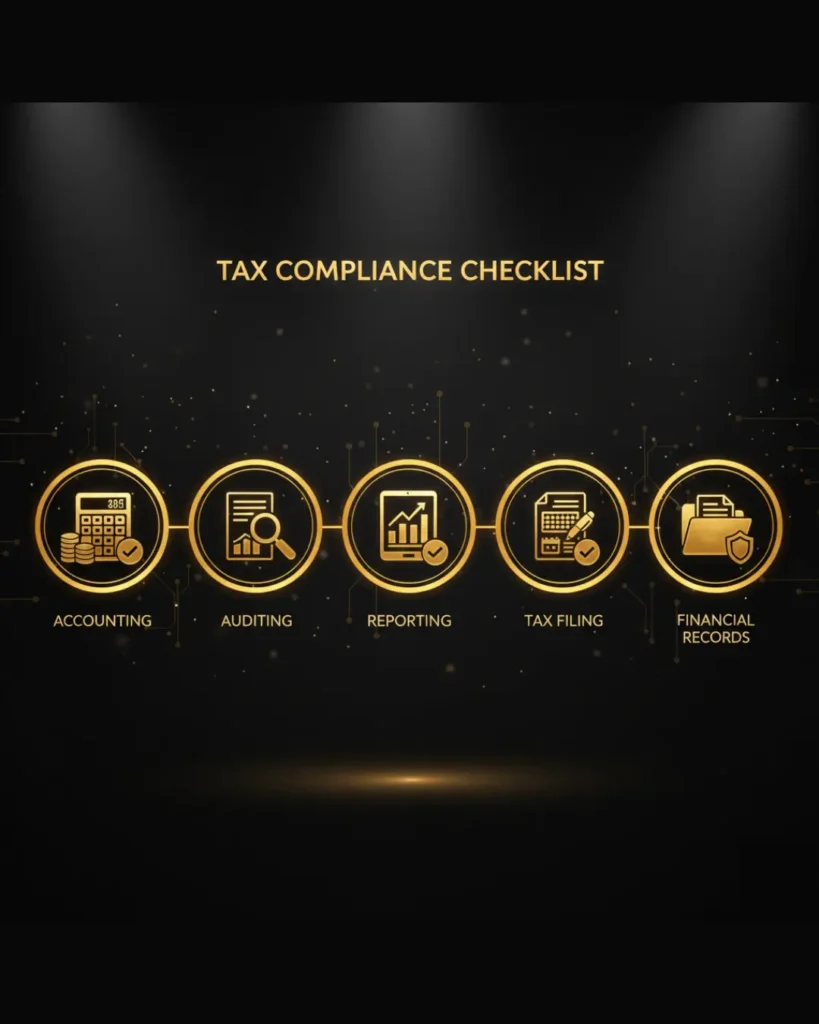
Accounting Requirements for Corporate Tax
With corporate tax now in place, proper bookkeeping has become more important.
Businesses should maintain:
• Revenue records
• Expense documentation
• Payroll data
• Bank statements
• Invoices and contracts
Financial records must be retained for at least 7 years.
This ensures compliance during audits or regulatory reviews.
Corporate Tax vs VAT in the UAE
Many entrepreneurs confuse corporate tax with Value Added Tax.
The two taxes serve different purposes.
| Tax Type | Applied To |
|---|---|
| Corporate Tax | Business profits |
| VAT | Goods and services |
VAT is currently charged at 5% and applies to businesses whose revenue exceeds AED 375,000 annually.
Some companies must comply with both taxes.
Common Corporate Tax Mistakes Small Businesses Make
Many new businesses make avoidable mistakes when dealing with corporate tax.
1. Assuming Free Zone Companies Pay No Tax
Free Zone companies must still meet qualifying conditions.
2. Not Registering on Time
Corporate tax registration is mandatory.
3. Poor Accounting Records
Without proper bookkeeping, tax filings become difficult.
4. Ignoring Transfer Pricing Rules
Businesses dealing with related parties must follow documentation requirements.
Benefits of the UAE Tax System for Entrepreneurs
Even with corporate tax, the UAE remains extremely attractive for business owners.
Key advantages include:
• No personal income tax
• Competitive 9% corporate tax rate
• Strong international banking system
• Access to global markets
• Stable regulatory environment
These benefits are why thousands of entrepreneurs from India, Europe, and Africa continue expanding into Dubai every year.
Can Entrepreneurs Start a UAE Company Remotely?
Yes.
Many founders complete the initial incorporation process remotely before traveling to the UAE.
A professional advisory firm can assist with:
• Company registration
• Corporate tax registration
• Visa processing
• Bank account preparation
• Accounting setup
This allows entrepreneurs to establish a UAE presence while continuing to operate globally.

Final Thoughts
The introduction of UAE Corporate Tax marks an important step in the country’s economic evolution.
However, the system remains one of the most entrepreneur-friendly tax regimes in the world.
For small businesses and startups, the 0% threshold and Small Business Relief scheme provide significant breathing room during early growth stages.
With proper planning, accounting, and compliance, entrepreneurs can continue to benefit from the UAE’s dynamic business environment while staying fully compliant with the new tax rules.
Frequently Asked Questions
Is corporate tax mandatory in the UAE?
Yes. All businesses must register for corporate tax, even if they qualify for 0% tax.
What is the UAE corporate tax rate?
The standard rate is 9% on profits above AED 375,000.
Do Free Zone companies pay corporate tax?
Some Free Zone businesses may qualify for 0% corporate tax if they meet certain requirements.
If you’re planning to start a business in Dubai and want to understand corporate tax implications before choosing Mainland or Free Zone structure, professional guidance can make the process much easier.
Our advisory team assists entrepreneurs with company formation, tax registration, and compliance support across the UAE.
Contact us today to explore the best structure for your business.






No comment yet, add your voice below!