


🧭 Introduction: Why UAE Corporate Structure Is a Strategic Layer in 2026
In 2026, corporate structuring in the UAE is widely regarded as a foundational business design decision rather than a procedural setup step.
Within the regulatory environment of the United Arab Emirates, founders in tech and service consultancy sectors are increasingly required to align their structure with:
Table of Contents
- Licensing frameworks
- Tax registration obligations
- Banking risk classification systems
- Operational scalability requirements
- Cross-border service delivery models
Rather than being static, corporate structure now functions as a dynamic operating framework that influences long-term business performance and compliance alignment.
🧠 What Corporate Structure Actually Means in Practice
Corporate structure refers to the legal and operational configuration through which a business is:
- Registered
- Licensed
- Tax-classified
- Operationally governed
In the UAE ecosystem, structure also defines:
- Jurisdiction of operation
- Permitted commercial activities
- Ownership classification
- Reporting obligations
- Banking eligibility profile
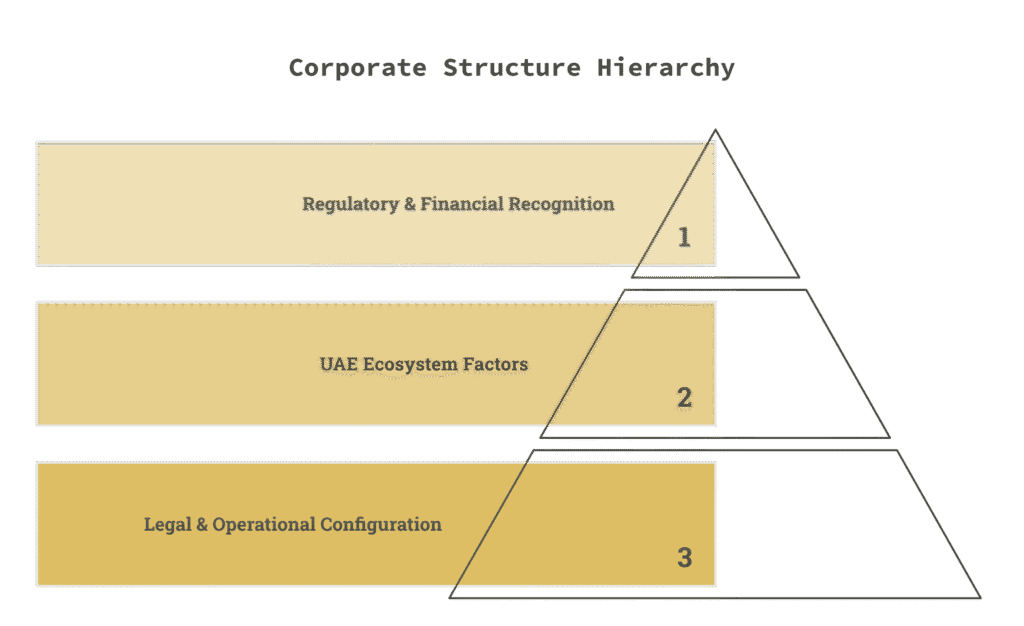
In practical terms, structure determines how a business is “recognized and processed” across regulatory and financial systems.
🏗️ Main Corporate Structure Options in the UAE (2026 Overview)
🟡 Free Zone Company (FZE / FZCO)
Free Zone structures are commonly used for digitally driven and internationally oriented businesses.
Typical use cases:
- SaaS companies
- AI and tech startups
- Digital marketing agencies
- Remote service consultancies
Key structural characteristics:
- 100% foreign ownership in most jurisdictions
- Defined operational zones
- Activity-based licensing frameworks
- Ecosystem-driven business support environments
Operational advantages (contextual, not absolute):
- Streamlined incorporation processes
- Structured visa eligibility options
- Strong alignment with international operations
Important compliance note:
Certain revenue classifications may be subject to UAE corporate tax rules depending on qualifying income definitions and activity alignment.
🟡 Mainland Limited Liability Company (LLC)
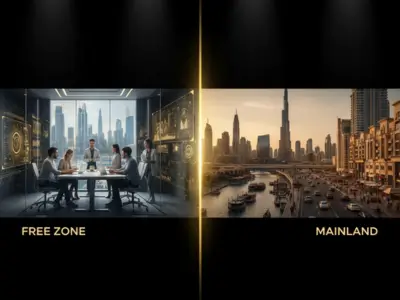
Mainland structures are generally associated with businesses operating directly within the UAE domestic market.
Typical use cases:
- Local consulting firms
- Enterprise service providers
- Government and semi-government contractors
- Hybrid service businesses with physical presence
Key structural characteristics:
- Access to UAE-wide commercial activity
- Broader client contracting flexibility
- Regulated licensing and compliance oversight
Operational advantages (contextual):
- Ability to engage directly with mainland clients
- Strong positioning for institutional contracts
Consideration:
Mainland entities generally require more structured compliance, accounting discipline, and regulatory engagement compared to Free Zone entities.
🟡 Branch of Foreign Company
This structure is used by international businesses expanding into the UAE without creating a separate legal entity.
Typical use cases:
- Multinational consulting firms
- Established tech companies entering UAE market
Key characteristics:
- Legally tied to parent company
- Operational scope defined by branch license
- Centralized reporting structure
Strategic relevance:
Useful for companies prioritizing global consistency and centralized governance models.
🟡 Sole Establishment
This structure is generally used by individual professionals and early-stage consultants.
Typical use cases:
- Freelancers
- Independent advisors
- Solo service providers
Limitations:
- Unlimited personal liability exposure
- Limited scalability potential
- Reduced institutional credibility for enterprise deals
🧩 Decision-Making Framework for Choosing a Structure

Corporate structuring decisions are typically guided by operational and strategic factors rather than one-size-fits-all rules.
Step 1: Identify Revenue Geography
- Global clients → Free Zone structure often considered
- UAE-based enterprise clients → Mainland structure often considered
Step 2: Define Business Model Type
- Product-based (SaaS / tech) → Free Zone commonly used
- Service-based consulting → Mainland or hybrid often used
Step 3: Evaluate Scalability Intent
- Lifestyle consultancy → simpler structures may be sufficient
- Growth-oriented business → structured entity planning required
- Investor-backed startup → Free Zone often preferred for flexibility
Step 4: Assess Operational Exposure
- High contract liability → structured LLC often preferred
- Digital service delivery → Free Zone often sufficient
Step 5: Workforce Strategy
- Remote/global teams → Free Zone alignment
- On-ground UAE workforce → Mainland alignment
💰 Compliance Landscape in the UAE (2026 Context)
Corporate structures operate within a defined regulatory ecosystem that includes:
- Corporate tax registration frameworks
- Licensing authority requirements
- Economic substance regulations (where applicable)
- Financial reporting obligations
- Activity-based classification systems
Compliance expectations vary depending on jurisdiction, business activity, and operational scale.
🧾 Tech Companies vs Service Consultancies — Structural Differences
🟦 Tech & SaaS Companies
Technology-driven companies often prioritize:
- Intellectual property ownership clarity
- Scalable operational models
- Cross-border delivery capability
Common structural preference:
- Free Zone entities
- IP holding structures (in more advanced setups)
🟩 Service Consultancies
Service-based businesses typically prioritize:
- Client accessibility
- Contract flexibility
- Regional market penetration
Common structural preference:
- Mainland LLC structures
- Hybrid Free Zone + Mainland models in some cases
⚠️ Common Structural Challenges Observed in the Market
Some businesses encounter operational friction due to:
- Misalignment between license activity and actual operations
- Incomplete financial segregation between personal and business accounts
- Banking onboarding delays due to risk classification
- Lack of documentation readiness for compliance reviews
- Weak long-term structuring strategy at setup stage
🧠 Future-Proof Structuring Approach (2026 Perspective)
A more resilient structuring approach typically includes:
- Clearly defined legal entity boundaries
- Activity-aligned licensing strategy
- Scalable jurisdiction planning (Free Zone + Mainland optionality)
- Proper accounting and audit readiness systems
- Documentation aligned with compliance expectations
This approach supports both operational clarity and long-term adaptability.
📌 Key Takeaways
Corporate structure in the UAE is not a static decision — it is an evolving operational framework influenced by:
- Market access requirements
- Regulatory classification
- Business model design
- Growth strategy
- Compliance obligations
A structured approach improves clarity, scalability, and operational alignment over time.




No comment yet, add your voice below!