


Dubai Business License Types Explained (2026): Complete UAE Guide
Table of Contents
- Introduction
- What Is a Business License?
- Why Choosing the Right License Matters
- Who Issues Business Licenses in the UAE?
- Main Types of Business Licenses
- Understanding Business Activities
- Mainland vs Free Zone Licensing
- Choosing the Right License
Introduction
Starting a business in Dubai begins with one of the most important decisions in the company formation process—selecting the appropriate business licence. The type of licence issued determines the business activities a company may legally undertake and influences the regulatory requirements that apply to its operations.
Dubai’s business environment supports companies across a wide range of industries, including trading, professional services, manufacturing, technology, healthcare, tourism, education, and e-commerce. To accommodate these sectors, licensing authorities issue different categories of business licences based on the nature of the proposed activities.
Choosing a licence is not simply an administrative requirement. It affects operational flexibility, regulatory compliance, future expansion plans, and, in some cases, additional approvals from competent authorities.
This guide explains the common business licence types available in Dubai and the UAE, outlines their typical use cases, and highlights important considerations before applying.
What Is a Business License?
A business licence is an official authorization issued by the relevant licensing authority that allows a company to conduct approved business activities within the UAE.
The licence specifies:
- Approved business activities
- Legal structure
- Licensing authority
- Jurisdiction
- Company name
- Licence validity period
Businesses should ensure that the activities listed on the licence accurately reflect their intended operations. Conducting activities outside the approved scope may require amendments or additional approvals.
Why Choosing the Right License Matters
Selecting an appropriate business licence supports both compliance and operational efficiency.
Factors influenced by the licence include:
- Approved commercial activities
- Regulatory approvals
- Office requirements
- Immigration eligibility
- Future expansion opportunities
- Banking documentation
- Ongoing compliance obligations
Businesses should evaluate both their current operations and long-term objectives before deciding on a licence category.
Who Issues Business Licenses?
Business licences are issued by different authorities depending on the jurisdiction where the company will be established.
Mainland Licensing
Mainland businesses are licensed through the competent licensing authority of the relevant emirate, subject to applicable regulations.
Mainland structures may be suitable for businesses intending to operate throughout the UAE, depending on the nature of their activities.
Free Zone Authorities
Each Free Zone operates under its own regulatory authority and issues licences for businesses established within that Free Zone.
Different Free Zones often specialise in sectors such as:
- Technology
- Media
- Logistics
- Manufacturing
- Healthcare
- Financial Services
- Education
- Creative Industries
Businesses should review the specific licensing framework of the selected Free Zone before incorporation.
Main Types of Business Licenses
Although licence names and categories may differ between authorities, the following licence types are commonly available.
1. Commercial License
A Commercial Licence is generally issued to businesses engaged in trading activities.
Typical activities may include:
- Import and export
- Wholesale trading
- Retail businesses
- Distribution
- General trading (where permitted)
- Commercial brokerage
- Product sales
Commercial licences are commonly used by companies involved in buying and selling goods within approved business activities.
2. Professional License
Professional licences are generally intended for businesses providing services based on professional expertise, technical knowledge, or specialised skills.
Examples include:
- Business consulting
- Marketing agencies
- IT consulting
- Engineering consultancy
- Design services
- Accounting support
- Educational services
- Management consulting
The exact scope depends on the approved business activities and applicable regulations.
3. Industrial License
Industrial licences are commonly issued to businesses involved in manufacturing or industrial production.
Examples include:
- Food production
- Manufacturing facilities
- Assembly operations
- Packaging
- Industrial processing
- Production plants
Depending on the activity, additional approvals may be required from relevant authorities.
4. Tourism License
Businesses operating within tourism-related sectors may require a tourism licence or approvals relevant to their activities.
Examples include:
- Travel agencies
- Tour operators
- Hospitality services
- Tourism management
- Holiday planning services
Specific requirements vary depending on the services offered.
5. E-Commerce License
As digital business continues to grow, many entrepreneurs choose licences that support online commercial activities.
Typical examples include:
- Online retail
- Digital marketplaces
- Online services
- Software subscriptions
- Digital products
- Platform businesses
Businesses should ensure that their selected activities accurately cover their intended online operations.
6. Freelance Permit
Some jurisdictions offer freelance permits for eligible professionals working independently in approved sectors.
These may include:
- Media
- Design
- Technology
- Education
- Content creation
- Consultancy
Eligibility requirements differ between licensing authorities.
Understanding Business Activities
Selecting a licence begins with identifying the correct business activities.
Most authorities classify activities into categories such as:
- Commercial
- Professional
- Industrial
- Educational
- Healthcare
- Financial
- Technology
- Logistics
- Media
- Hospitality
Some activities are regulated and require approvals from competent government entities before licensing.
Businesses should review the official activity lists published by the relevant licensing authority.
Mainland vs Free Zone Licensing
| Feature | Mainland | Free Zone |
|---|---|---|
| Licensing Authority | Relevant emirate authority | Individual Free Zone Authority |
| Business Activities | Wide range | Depends on Free Zone |
| Office Options | Varies | Varies by authority |
| Industry Focus | General | Often sector-specific |
| Regulatory Framework | Mainland regulations | Free Zone regulations |
Neither option is universally better. The most suitable choice depends on business objectives, target customers, operational requirements, and the applicable regulatory framework.
How to Choose the Right Business License
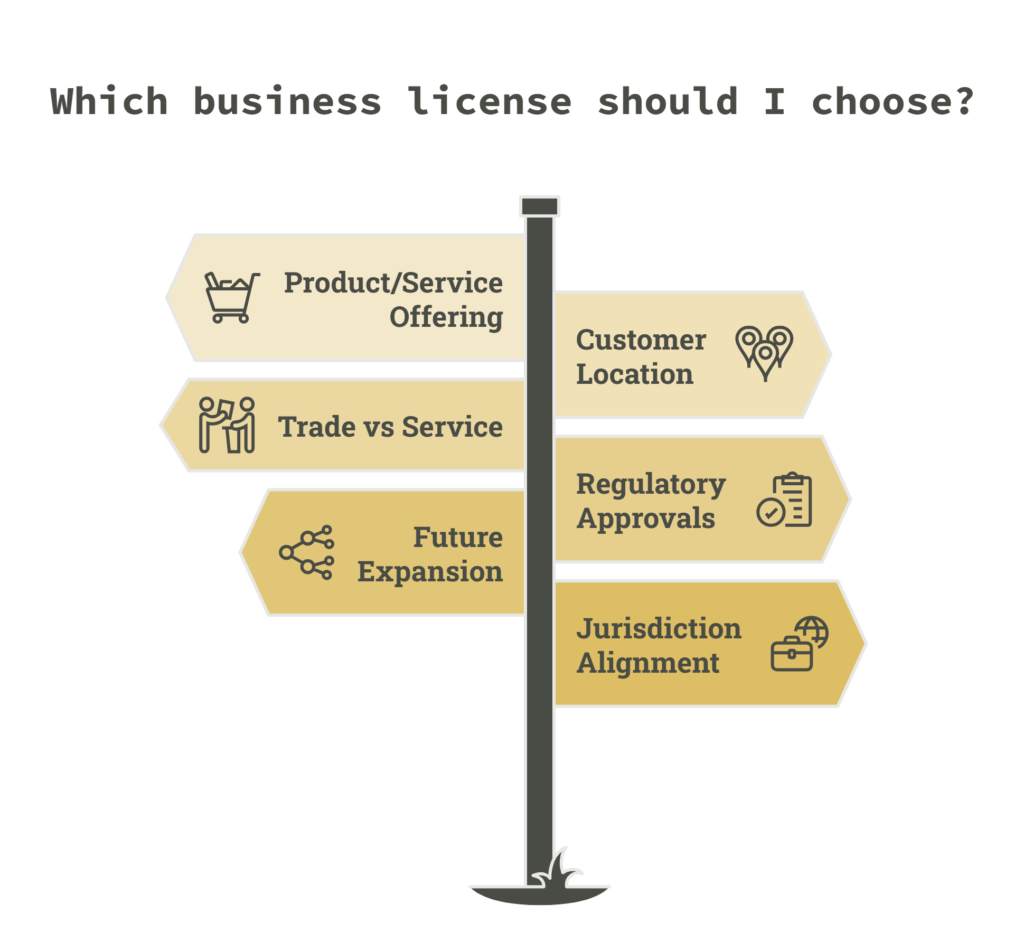
Before applying, businesses should consider:
- What products or services will be offered?
- Where will customers be located?
- Will the company trade goods or provide services?
- Are any regulatory approvals required?
- What are the future expansion plans?
- Which jurisdiction aligns with the business model?
Choosing a licence based on long-term operational needs rather than short-term convenience can support sustainable growth.
Documents Commonly Required
The exact documentation required depends on the licensing authority, business activity, and legal structure. However, businesses are commonly asked to provide the following:
| Document | Typical Purpose |
|---|---|
| Passport copies of shareholders | Identity verification |
| Passport copies of managers or directors | Management verification |
| Passport-size photographs | Licensing records |
| Trade name reservation (where applicable) | Company name approval |
| Initial approval (if applicable) | Preliminary licensing approval |
| Memorandum or Articles of Association | Company formation |
| Parent company documents (for branches/subsidiaries) | Overseas company verification |
| Board Resolution (where applicable) | Parent company authorization |
| Office lease or tenancy documents | Business premises verification |
| Additional approvals | Required for regulated activities |
Note: Requirements differ depending on the jurisdiction and business activity. Always verify the latest documentation requirements with the relevant licensing authority.
Step-by-Step Business Licence Application Process
Although procedures vary across jurisdictions, the licensing process generally follows these stages.
Step 1 – Identify Business Activities
Choose the business activities that accurately represent your intended operations.
Some activities require approval from additional government authorities.
Step 2 – Select the Legal Structure
Choose the company structure that best supports your operational and commercial objectives.
Examples include:
- Sole Establishment
- Civil Company
- Limited Liability Company (LLC)
- Branch Office
- Representative Office
- Free Zone Company
Step 3 – Reserve a Trade Name
Where applicable, businesses reserve a trade name that complies with the naming rules of the relevant authority.
Step 4 – Obtain Initial Approval
Certain licensing authorities require initial approval before incorporation can proceed.
Step 5 – Prepare Legal Documents
Prepare incorporation documents and supporting paperwork according to the licensing authority’s requirements.
Step 6 – Secure Office Space
Depending on the licence category, businesses may need an approved office, flexi-desk, warehouse, or industrial premises.
Step 7 – Submit the Licence Application
Applications are submitted together with supporting documentation and applicable government fees.
Step 8 – Receive the Business Licence
Once approved, the licensing authority issues the business licence, allowing the company to operate within its approved business activities.
Business Licence Renewal
Business licences are generally issued for a defined validity period and require renewal before expiry.
Renewal commonly involves:
- Valid licence information
- Updated tenancy or office documentation (where applicable)
- Payment of applicable renewal fees
- Compliance with licensing authority requirements
Businesses should monitor renewal dates to avoid interruptions to business operations.
Corporate Tax and VAT Considerations
Obtaining a business licence does not automatically determine a company’s tax obligations.
Businesses should independently assess whether they are required to:
- Register for UAE Corporate Tax
- Register for VAT where applicable
- Maintain accounting records
- File tax returns within prescribed deadlines
- Retain business records
Requirements depend on the applicable legislation and the circumstances of each business.
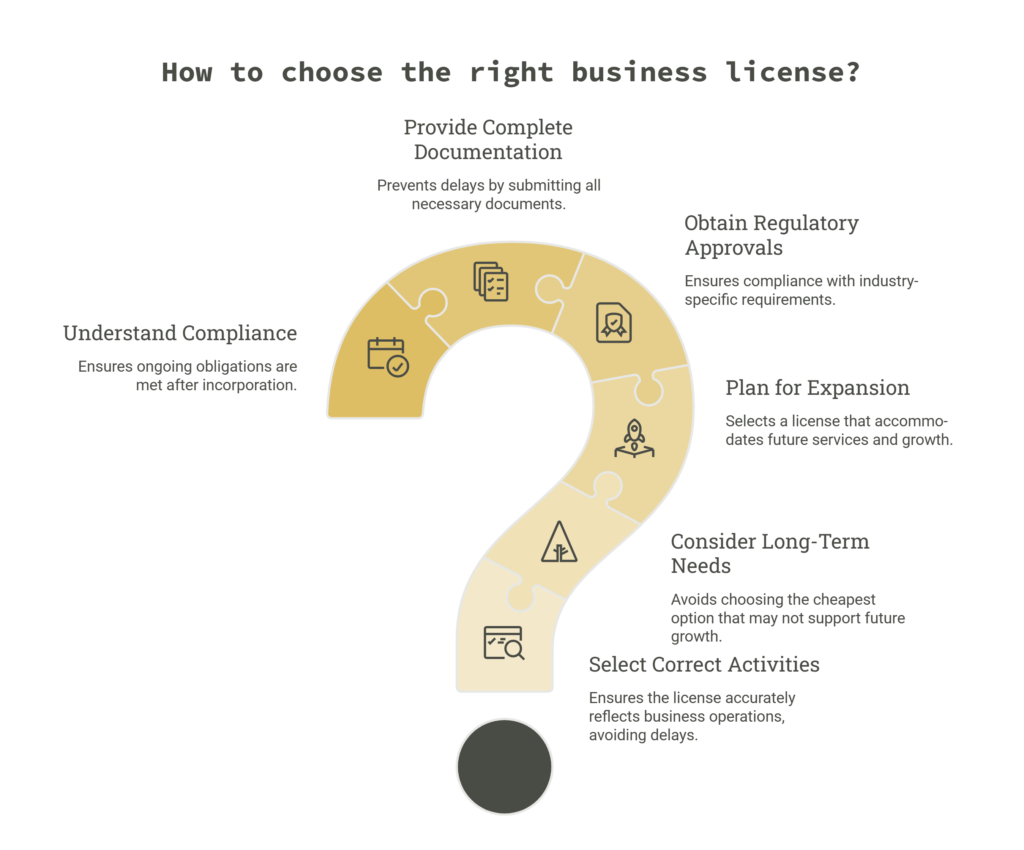
Common Mistakes When Choosing a Business Licence
Many businesses encounter delays because of avoidable mistakes.
Common examples include:
Selecting Incorrect Business Activities
Activities should accurately reflect the company’s intended operations.
Choosing a Licence Based Only on Cost
The least expensive option may not align with long-term operational requirements.
Ignoring Future Expansion
Businesses should consider future growth, additional services, and expansion plans when selecting a licence.
Overlooking Regulatory Approvals
Certain industries require approvals from competent authorities before commencing operations.
Incomplete Documentation
Missing or inconsistent documents may delay the licensing process.
Failing to Understand Compliance Requirements
Businesses should understand their ongoing obligations after incorporation, including licence renewal, accounting, taxation, and regulatory compliance.
Frequently Asked Questions
What is a business licence?
A business licence is an official authorization issued by the relevant UAE licensing authority allowing a company to carry out approved business activities.
Which licence is best?
There is no universal answer. The appropriate licence depends on the business activities, operational requirements, target customers, and applicable regulations.
Can one licence include multiple business activities?
Depending on the licensing authority and regulations, businesses may include multiple approved activities under one licence.
What is the difference between a Commercial and Professional Licence?
Commercial licences generally relate to trading activities, while Professional licences are commonly used for service-based businesses. The approved activities determine the licence category.
Do Free Zone companies receive different licences?
Yes. Individual Free Zone authorities issue licences under their own regulatory framework.
Can licences be amended later?
Many authorities allow amendments, subject to applicable procedures and approvals.
Is office space always required?
Office requirements vary depending on the licensing authority and licence category.
Can foreign investors own a UAE company?
Ownership structures depend on the applicable laws, business activity, and licensing jurisdiction.
Does every business need Corporate Tax registration?
Corporate Tax obligations depend on the applicable legislation and the circumstances of each business.
Can businesses change their activities later?
Many authorities allow additional activities or amendments through prescribed procedures.
How long does licensing take?
Processing times vary depending on the jurisdiction, business activity, documentation, and regulatory approvals.
Is a business licence the same as company registration?
A business licence forms part of the overall company formation process, but additional registrations or approvals may also be required.
Key Takeaways
- Every UAE business requires an appropriate licence based on its approved activities.
- Common licence categories include Commercial, Professional, Industrial, Tourism, E-commerce, and sector-specific licences.
- Licensing authorities and procedures vary between Mainland and Free Zone jurisdictions.
- Business activities determine licensing requirements and may influence additional regulatory approvals.
- Choosing the appropriate licence should be based on operational requirements rather than cost alone.
- Businesses should understand ongoing obligations, including licence renewal and applicable tax compliance.
- Always refer to the relevant UAE licensing authority for current requirements.
Conclusion
Choosing the appropriate business licence is a fundamental step when establishing a company in Dubai or elsewhere in the UAE. The licence defines the activities a business may undertake and forms part of the broader regulatory framework governing its operations.
Whether establishing a trading company, consultancy, technology business, manufacturing operation, or service provider, businesses should carefully evaluate their objectives, business activities, and jurisdiction before applying. Because licensing requirements differ between authorities and industries, consulting official guidance and obtaining qualified professional advice can help businesses make informed decisions.
By selecting a licence that aligns with both current operations and future growth plans, entrepreneurs and investors can build a stronger foundation for long-term business success in the UAE.
Need Guidance on Business Licensing in the UAE?
AdeptBiz Consulting supports entrepreneurs and international investors with:
- Business setup advisory
- Mainland company formation
- Free Zone company formation
- Business licence applications
- Corporate Tax advisory
- VAT advisory
- Accounting and bookkeeping
- PRO and immigration support
Visit our website to explore our business setup resources and learn more about establishing a business in the UAE.
Important Notice
This guide is provided for general informational and educational purposes only. It does not constitute legal, tax, accounting, immigration, or professional advice. Licensing requirements vary depending on the business activity, jurisdiction, and applicable UAE regulations. Always verify current requirements with the relevant licensing authority before making business decisions.
Internal Linking
Link this article to:







No comment yet, add your voice below!