


Dubai Mainland vs Free Zone Introduction
Dubai has established itself as one of the world’s leading destinations for entrepreneurs, startups, investors, and international businesses. Its strategic location, advanced infrastructure, business-friendly environment, and global connectivity continue to attract companies from around the world.
One of the first and most important decisions entrepreneurs face when establishing a business in the UAE is choosing between a Dubai Mainland company vs Free Zone company.
Both options offer legitimate pathways for conducting business in the UAE. However, the most suitable structure depends on several factors, including business activities, target markets, operational requirements, growth plans, regulatory obligations, and long-term objectives.
This guide explains the key differences between Mainland and Free Zone business setup options and highlights the factors businesses should consider before making a decision.

Table of Contents
Why Dubai Continues to Attract Businesses
Dubai remains a preferred destination for business formation due to several factors that support entrepreneurship and economic growth.
Strategic Location
The UAE serves as a gateway connecting markets across the Middle East, Africa, Europe, and Asia. This strategic position enables businesses to access regional and international opportunities efficiently.
Advanced Infrastructure
Businesses benefit from modern transportation networks, international airports, seaports, telecommunications infrastructure, and digital connectivity.
Diverse Economy
Dubai’s economy spans multiple sectors including:
- Professional services
- Technology
- E-commerce
- Logistics
- Tourism
- Healthcare
- Manufacturing
- Financial services
This diversification creates opportunities for businesses operating across various industries.
Business Ecosystem
The UAE continues to develop initiatives supporting innovation, entrepreneurship, digital transformation, and foreign investment.
Understanding Mainland Companies
A Mainland company is generally licensed by the relevant economic authority within the emirate where it operates.
Mainland businesses can undertake activities according to the conditions of their license and applicable regulations.
Common Characteristics of Mainland Companies
Mainland companies are often selected by businesses seeking operational flexibility and long-term expansion opportunities.
Typical characteristics include:
- Wide range of business activities
- Multiple legal structure options
- Access to local and international markets
- Ability to establish offices within the UAE
- Subject to applicable federal and local regulations
Specific requirements vary depending on the activity, licensing authority, and legal structure selected.
Understanding Free Zone Companies
A Free Zone company is established within a designated Free Zone authority operating under its own regulatory framework.
Different Free Zones focus on different sectors and industries.
Examples include business communities supporting:
- Technology
- Media
- Logistics
- Manufacturing
- Education
- Healthcare
- Financial services
- Professional consulting
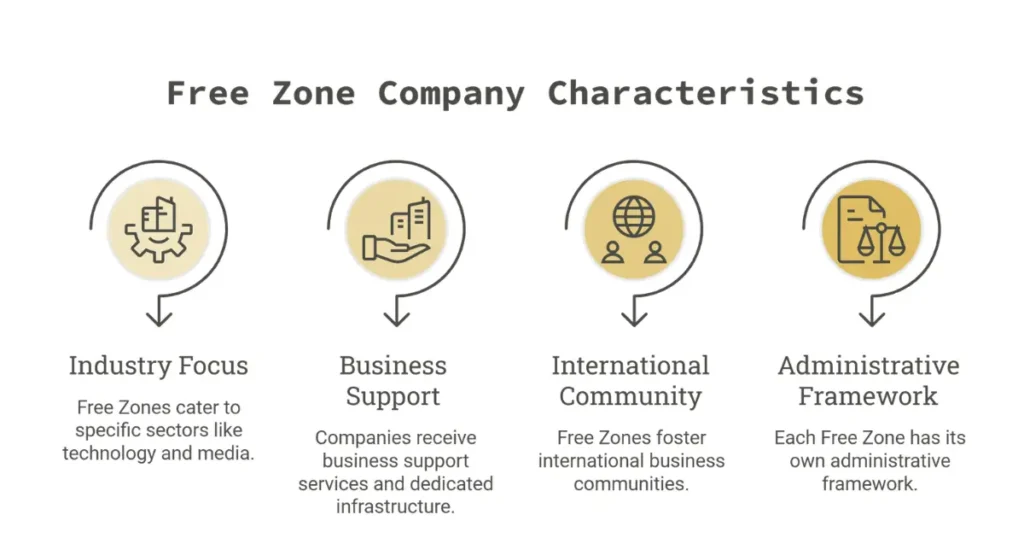
Common Characteristics of Free Zone Companies
Free Zone companies often benefit from:
- Industry-focused ecosystems
- Business support services
- Dedicated infrastructure
- International business communities
- Authority-specific administrative frameworks
Requirements vary significantly among Free Zones, making individual assessment important.
Mainland vs Free Zone: Key Differences
1. Business Activities
The business activity selected during company formation is often the most important consideration.
Questions businesses should evaluate include:
- Will the company provide professional services?
- Will it trade goods?
- Will it operate an e-commerce platform?
- Will it engage in manufacturing activities?
- Will it serve domestic or international customers?
Certain activities may require additional approvals regardless of the jurisdiction selected.
Selecting the correct activity from the beginning can help reduce future administrative complications.
2. Target Customers and Markets
Understanding where customers are located is critical.
Mainland Companies
Businesses seeking broad operational flexibility may consider Mainland structures depending on their objectives and regulatory requirements.
Free Zone Companies
Businesses focused on international operations or industry-specific ecosystems may consider Free Zone structures depending on their circumstances.
The appropriate choice depends on the business model and applicable regulations.
3. Office Requirements
Office requirements vary based on:
- Licensing authority
- Business activity
- Company structure
- Visa requirements
- Regulatory obligations
Some businesses require dedicated commercial premises, while others may have different options depending on the authority’s framework.
Businesses should always verify current requirements directly with the relevant licensing authority.
4. Visa Considerations
Many entrepreneurs establish companies with plans to obtain residence visas for themselves, shareholders, family members, or employees.
Visa eligibility depends on several factors including:
- Company structure
- Office arrangements
- Licensing conditions
- Immigration requirements
- Regulatory policies
Visa allocations and requirements may change over time and should be verified through official channels.
5. Banking Considerations
Opening a corporate bank account is a significant part of the business setup process.
Banks typically evaluate:
- Nature of business activities
- Ownership structure
- Source of funds
- Business model
- Compliance procedures
- Supporting documentation
Bank account approval remains subject to each financial institution’s internal policies and regulatory obligations.
A company license alone does not guarantee account approval.
Businesses should prepare clear documentation and maintain transparency throughout the application process.
Licensing and Regulatory Considerations
Before establishing a company, businesses should understand the regulatory framework governing their activities.
Commercial Activities
Commercial licenses generally apply to businesses engaged in trading and commercial operations.
Professional Activities
Professional licenses generally apply to consultancy and service-based activities.
Industrial Activities
Industrial activities may require additional approvals depending on the nature of operations.
Regulated Activities
Certain sectors require approvals from specific government entities or regulatory authorities.
Examples may include:
- Financial services
- Healthcare
- Education
- Telecommunications
- Transportation
Businesses should always verify activity-specific requirements before proceeding.
Accounting and Financial Record Keeping
Regardless of the business structure selected, maintaining proper financial records is an important operational responsibility.
Businesses may benefit from implementing accounting procedures from the early stages of operation.
Financial records commonly include:
- Invoices
- Contracts
- Purchase records
- Sales records
- Bank statements
- Financial reports
Accurate record keeping supports regulatory compliance and informed business decision-making.
Corporate Tax Considerations
Businesses operating in the UAE should assess their Corporate Tax obligations under applicable legislation.
Key considerations may include:
- Registration obligations
- Return filing requirements
- Record retention requirements
- Financial reporting responsibilities
- Tax compliance procedures
Corporate Tax treatment depends on individual circumstances and applicable legislation.
Businesses should refer to official guidance issued by the relevant authorities and obtain professional advice where necessary.
VAT Considerations
Businesses should also assess potential Value Added Tax (VAT) obligations.
Areas requiring attention may include:
- VAT registration requirements
- VAT return filing
- Tax invoice requirements
- Record retention obligations
- Compliance procedures
VAT obligations vary depending on business activities and circumstances.
Official guidance should always be consulted before making decisions.
Planning for Future Business Growth
The company structure selected today should support future business objectives.
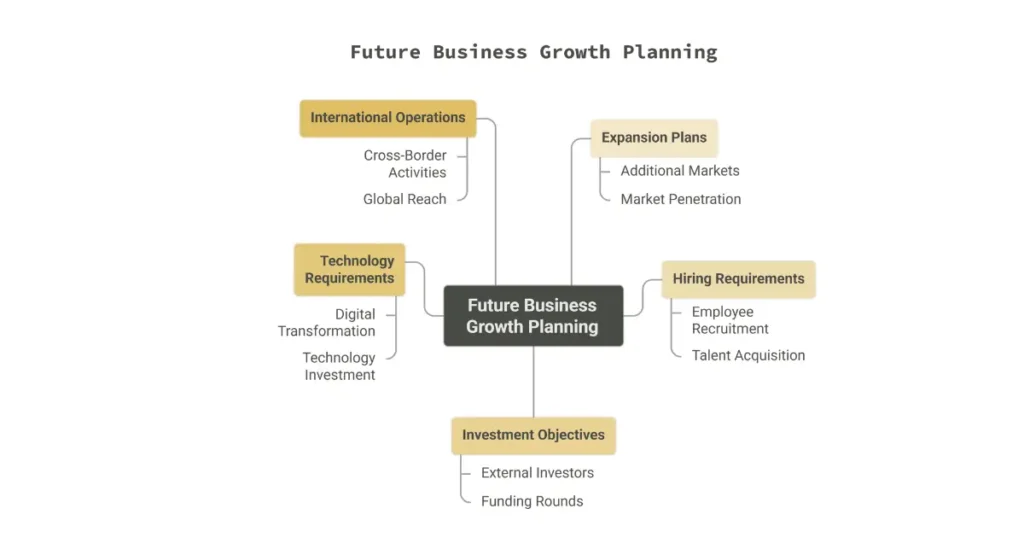
Entrepreneurs should consider:
Expansion Plans
Will the business expand into additional markets?
Hiring Requirements
Will the company recruit employees in the future?
Investment Objectives
Will external investors be introduced later?
Technology Requirements
Will digital transformation or technology investment become a priority?
International Operations
Will cross-border activities become significant?
Thinking beyond immediate setup costs can help businesses select a structure aligned with long-term goals.
Common Business Setup Mistakes
Many entrepreneurs focus primarily on formation costs and overlook strategic considerations.
Common mistakes include:
Choosing a Structure Before Selecting Activities
Business activities should generally be identified before selecting a jurisdiction.
Ignoring Future Compliance Requirements
Businesses should understand potential accounting, tax, and regulatory obligations from the outset.
Overlooking Banking Requirements
Banking considerations should form part of the planning process.
Underestimating Growth Plans
The structure suitable today may not be the most suitable structure several years from now.
Using Incomplete Documentation
Incomplete applications can result in delays and additional administrative requirements.
Practical Business Setup Scenarios
Professional Consultancy
A consultancy business should evaluate licensing requirements, target customers, visa needs, and future growth plans before selecting a structure.
E-Commerce Business
An e-commerce company should consider logistics requirements, customer locations, technology infrastructure, and compliance obligations.
Trading Business
Trading businesses should evaluate import, export, warehousing, and supply chain considerations.
Technology Startup
Technology businesses should assess investor requirements, intellectual property considerations, talent acquisition needs, and scalability.
Manufacturing Business
Manufacturing companies should evaluate facility requirements, approvals, supply chains, and operational infrastructure.
These examples are educational only and should not be interpreted as recommendations.
Frequently Asked Questions
Which option is better: Mainland or Free Zone?
Neither option is universally better. The most suitable choice depends on business objectives and operational requirements.
Can foreign entrepreneurs establish companies in Dubai?
Requirements depend on the chosen jurisdiction, activity, and applicable regulations.
Do both structures have compliance obligations?
Yes. Businesses should understand all applicable regulatory and compliance requirements.
Can a business have multiple activities?
This depends on licensing authority requirements and applicable regulations.
Do I need a physical office?
Requirements vary according to authority, activity, and company structure.
Can I change my business activity later?
Changes may be possible subject to applicable authority requirements and approvals.
Is Corporate Tax applicable?
Corporate Tax obligations depend on applicable legislation and individual circumstances.
Is VAT registration required?
VAT obligations depend on business activities and applicable thresholds.
Can I employ staff immediately?
Employment eligibility depends on company structure, approvals, and applicable regulations.
How long does company formation take?
Timelines vary depending on the licensing authority, business activity, and completeness of documentation.
Conclusion
Choosing between a Mainland company and a Free Zone company is one of the most important decisions in the UAE business setup process.
Rather than focusing solely on formation costs, businesses should evaluate business activities, target customers, operational requirements, banking considerations, compliance obligations, visa objectives, and long-term growth plans.
A carefully planned business structure can help support sustainable growth, operational efficiency, and ongoing compliance.
As regulations and requirements may evolve, businesses should always refer to official government resources and relevant licensing authorities for the most current information.
Disclaimer
This article is provided for general informational and educational purposes only. It does not constitute legal, tax, accounting, immigration, financial, or professional advice. Licensing requirements, regulations, fees, compliance obligations, and government policies may change over time. Businesses should consult the relevant authorities and qualified professionals regarding their specific circumstances.






1 Comment
[…] the application. File through your Mainland authority or your Free Zone’s renewal […]