


How to Pick the Right UAE Free Zone in 2026 (Without Getting Burned by a Cheap Package)
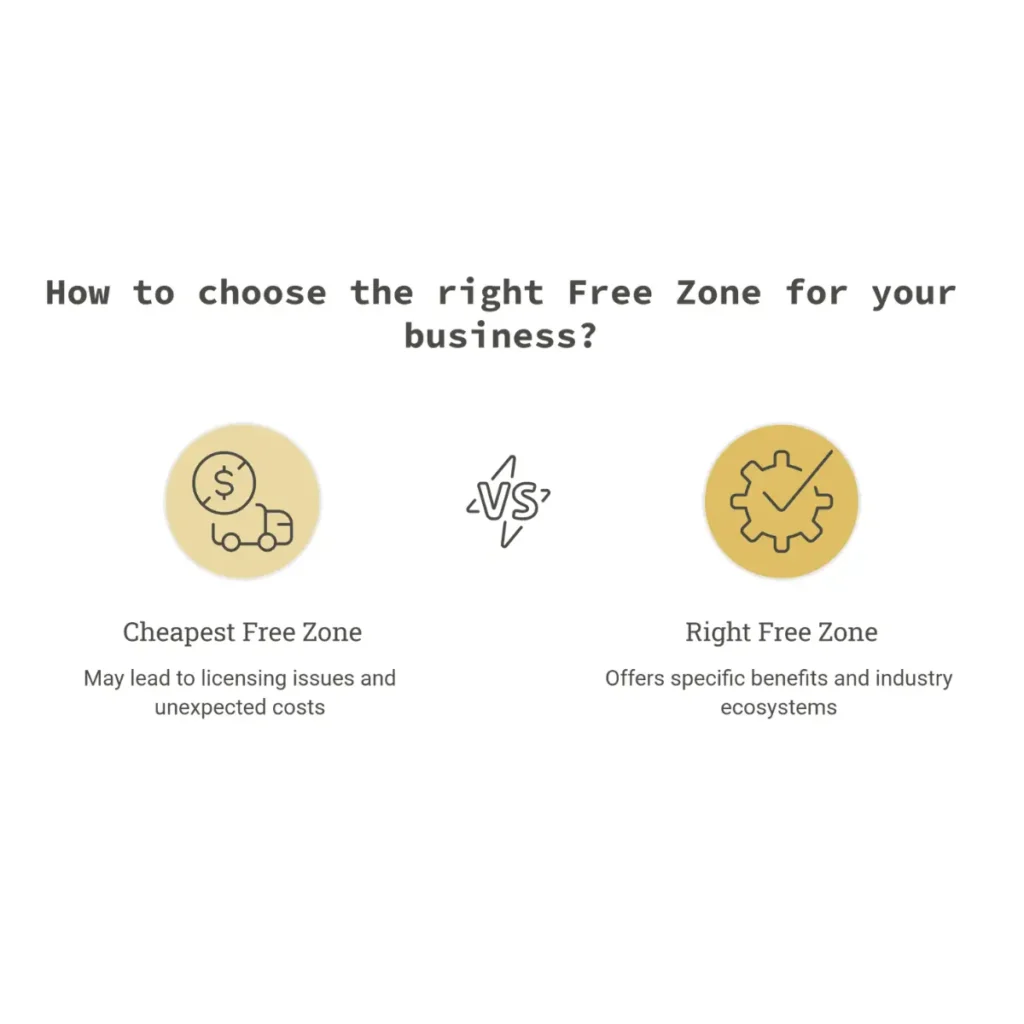
There are 40+ Free Zones in the UAE. One of them fits your business. Most of the others don’t — and picking the wrong one can cost you far more than the setup fee ever suggested.
Here’s the mistake almost every first-time founder makes: they Google “cheapest Free Zone UAE,” pick the lowest number on the page, and find out six months later that their license doesn’t quite cover what they’re actually doing, their bank won’t open an account, or their “0% tax” isn’t as automatic as the ad implied. Check more our UAE Business Setup Checklist
Table of Contents
Let’s fix that before you sign anything.
First: What Even Is a Free Zone?
A UAE Free Zone is a designated economic area run by its own authority, with its own rules, its own license types, and its own way of doing things. There are zones in Dubai, Abu Dhabi, Sharjah, RAK, Ajman, Umm Al Quwain, and Fujairah — built around everything from tech and media to logistics, healthcare, and manufacturing.
Why founders choose one at all:
- 100% foreign ownership
- Activity-specific license’s
- Profit and capital repatriation
- Built-in industry ecosystems
- Office and facility flexibility
Real perks. But the right perks depend entirely on the zone — which is why “cheapest” is the wrong first question.
The 14-Point Framework (Skip the Guesswork)

1. Your business activity comes first. Always.
Not every zone licenses every activity. Consultancy, trading, e-commerce, tech, media, manufacturing, logistics — confirm your exact activity is licensable before you fall in love with a price tag.
2. Match the activity to the actual license
Consultancy ≠ trading ≠ e-commerce, even if they sound similar. A mismatched license today becomes a compliance headache tomorrow.
3. Check the ecosystem, not just the price
A tech startup wants to be near other tech companies, investors, and service providers. A trading company wants to be near ports and logistics. Ask: “Does this zone match how I actually operate?” — not “Which one’s cheapest?”
4. Know your customers
- Serving UAE clients? Check what extra permissions that requires.
- Serving international clients? Think banking, currency, and cross-border contracts.
- Trading physical goods? Customs, warehousing, and port/airport access matter more than the license price ever will.
5. Location still matters — even online
Airport access, port access, employee commute, supplier meetings. A digital business can be borderless; the people running it usually aren’t.
6. Office requirements aren’t one-size-fits-all
Flexi-desk, shared office, serviced office, warehouse, industrial unit — a solo consultant and a manufacturing company need completely different setups. Confirm what you actually need before buying a package built for someone else’s business.
7. Calculate the real first-year cost
The advertised license fee is the tip of the iceberg. Add:
- Registration and trade name
- Office/workspace
- Visa and immigration costs
- Emirates ID, medical tests
- Banking, accounting, tax compliance, insurance
- Renewal fees
Compare total first-year cost, not headline price. Free Zone A at AED X vs. Free Zone B at AED Y means nothing until you’ve added everything else.

8. Visas: plan the number before you plan the desk
How many visas now? Dependents? Future hires? Your office arrangement often dictates your visa quota — confirm current numbers directly with the authority, because these shift.
9. Banking is not automatic
Incorporating a company and opening a corporate bank account are two separate battles. Banks look at your activity, ownership structure, source of funds, and documentation — a Free Zone license alone guarantees nothing.
10. The tax myth that costs people money
“Free Zone = zero tax” is not automatically true.
Per the UAE Federal Tax Authority: Free Zone entities do fall under UAE Corporate Tax. A Qualifying Free Zone Person can get a 0% rate on Qualifying Income — but only if specific conditions are met. Income outside that qualifying bucket is taxed under standard Corporate Tax rules.
Before incorporating, actually understand:
- Corporate Tax registration requirements
- What counts as a Qualifying Free Zone Person
- Qualifying vs. Excluded Activities
- Record-keeping obligations
Don’t build your financial model on a rumor.
11. VAT doesn’t disappear either
Whether you need to register depends on your taxable supplies — plan this before you start trading, not after.
12. Some activities need extra approvals
Healthcare, education, financial services, food, media, transport — regulated sectors often need sign-off beyond the Free Zone license itself. Check early.
13. Build for the business you’re becoming, not just today
Will you hire? Import/export? Expand emirates? Go Mainland eventually? Bring in investors? A bargain package for a solo founder can become a structural bottleneck for a growing company. Talk to our setup advisors.
14. Use a fit framework, not a price list
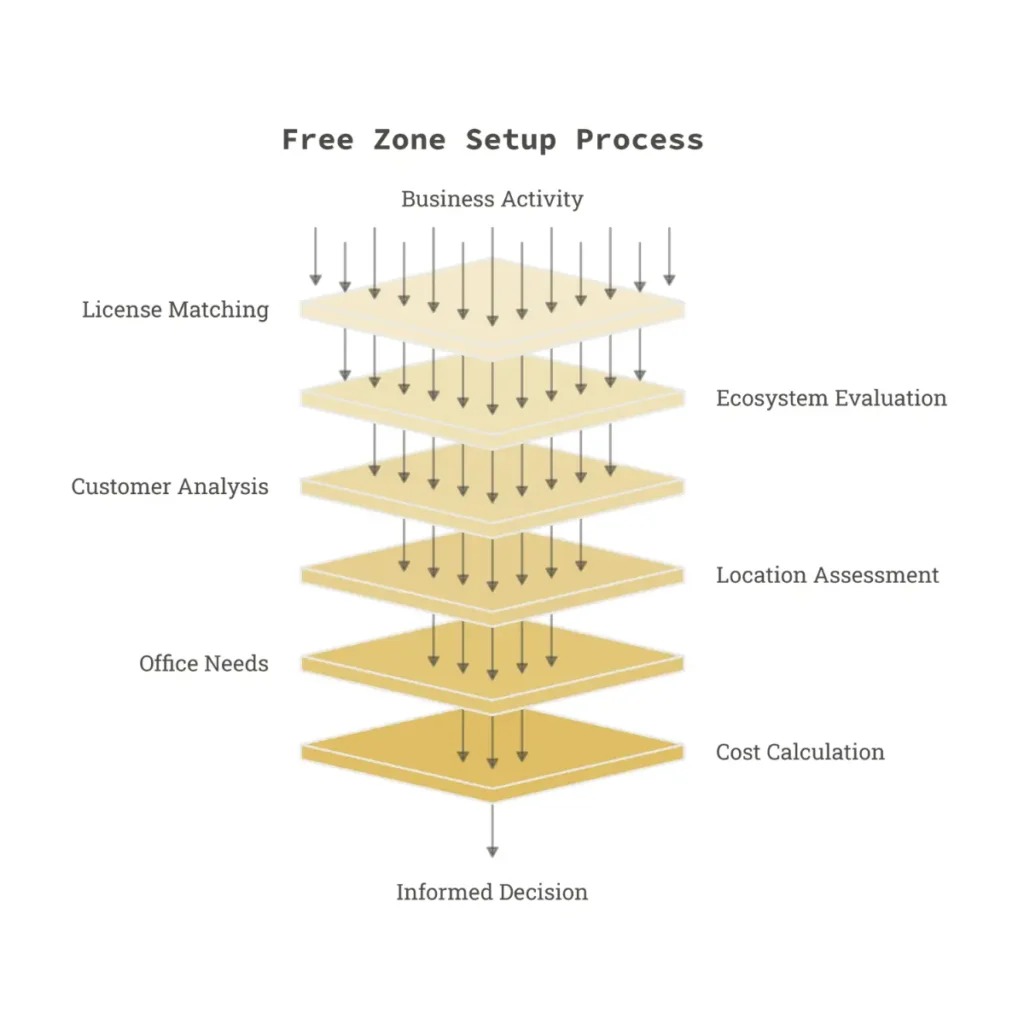
| Factor | The real question |
|---|---|
| Activity | Is my exact activity permitted? |
| License | Which category actually applies? |
| Location | Does it suit how I operate? |
| Office | What do I actually need? |
| Visas | How many, realistically? |
| Banking | Does this structure support it? |
| Tax | What are my real obligations? |
| VAT | Do I need to register? |
| Approvals | Does my activity need sign-off? |
| Customers | Where are they, really? |
| Logistics | Warehousing or transport needed? |
| Growth | Can this scale with me? |
| Renewal | What’s the ongoing cost? |
Free Zone vs. Mainland: There’s No Universal Winner
This isn’t a “which is better” question — it’s a fit question. Mainland gives you unrestricted UAE-wide trading under a Department of Economic Development license. Free Zone gives you a specialized ecosystem, ownership options, and licensing designed around specific sectors. Your activity, customers, and expansion plans decide which one actually fits.
Six Mistakes That Keep Costing Founders Money
- Choosing on price alone — the cheap package rarely stays cheap.
- Picking the zone before defining the activity — backwards, every time.
- Assuming every zone plays by the same rules — they don’t.
- Believing “Free Zone = zero tax” — it’s conditional, not automatic.
- Ignoring where the business will be in 3 years — today’s setup should survive tomorrow’s growth.
- Treating banking as a formality — it’s its own approval process.
Quick Checklist Before You Sign Anything
Business: Activity defined? Right license identified? Legal structure confirmed?
Operations: Zone fits your model? Office/warehouse needs mapped? Location works for you?
Visas: Know your number? Hiring plans? Dependent visas needed?
Finance: Business model documented? Banking requirements understood? Compliance budget set?
Tax: Corporate Tax reviewed? QFZP conditions checked? VAT position confirmed?
Growth: Room to hire? Room to add activities? Fits your 3-5 year plan?
Fast Answers to the Questions Everyone Asks
Is there a “best” Free Zone?
No — it depends entirely on your activity, licensing needs, location, visas, customers, and growth plans.
How many Free Zones are there?
More than 40, according to the UAE Ministry of Economy & Tourism.
Can foreigners own 100%?
Yes — 100% foreign ownership is a core Free Zone feature, though the exact structure should be confirmed with the specific authority.
Do Free Zone companies pay Corporate Tax?
They fall under the Corporate Tax regime. A Qualifying Free Zone Person can get 0% on Qualifying Income — but the conditions matter.
Good fit for a consultancy?
Yes, if the zone licenses your specific activity and your operating model fits its rules.
Can a Free Zone company serve UAE customers?
Yes, within applicable laws and licensing conditions — specifics depend on activity and operating model.
What does setup actually cost?
No single number — it depends on activity, license, office, visas, and approvals. Compare total first-year cost, not the advertised starting price.
Bottom Line
Choosing a Free Zone is a business-structure decision — not a license-price decision. Start with your activity. Then work through license, location, office, visas, customers, banking, tax, and growth — in that order.
With 40+ zones to choose from, the right one isn’t the cheapest. It’s the one built for how your business actually operates.
Regulatory requirements can change — always verify current details with the relevant Free Zone authority and the FTA before incorporating.
#AdeptBiz #AdeptBizUAE #AdeptBizInsights #BuildWithAdeptBiz #AdeptBizAdvisory




No comment yet, add your voice below!